Mailing list

Greeting

The Pop Culture Wing of Hot Corner Harbor
Showing posts with label RPGs. Show all posts

Wednesday, August 30, 2023

Cassette Beasts, Side B: Steam in the Subway, Earth Is Afire


I’m finally back with my promised second article on
Cassette Beasts! If you missed the first one, you can read it here; that one serves as my mostly spoiler-free general recommendation of the game. However, I also wanted to do some deeper looks into the game, its systems, its themes, and so on, which necessitates some spoilers. I’ll give a general warning when I start getting into mild things (like discussing specific monsters or the game’s mechanics), and then give a warning at the midpoint when I start moving into more serious story-related spoilers (as well as a few mentions about the story of Bytten Studio’s first game, Lenna’s Inception, which I covered here). Generally, I think this game is strong enough that being spoiled wouldn’t ruin it for you, but if you are sensitive to those, feel free to take advantage of those warnings as jumping off points, or even bookmark this for later, and come back later after you’ve played it some .

In the first part of my Cassette Beasts review, I mentioned that the game lived up to all of the expectations I had for it after loving Bytten Studio’s first game, Lenna’s Inception. And I want to look at that a little more; I’ve already said that they make for an interesting comparison, but there was something specific that stood out to me when I was looking at what I wanted to cover in a spoilered review. See, while it lived up to Lenna in quality, it was actually kind of funny how much expecting Cassette Beasts to be like its predecessor ended up surprising me, particularly in its world building.


Not to spoil it too much, but Lenna’s Inception breaks the fourth wall several times over the course of a playthrough, culminating in a few big reveals during the final dungeon that recontextualize everything you’ve seen to that point, in a way that directly calls attention to the fact that it is a video game. It’s a really big and fun twist, the kind of thing that makes you go back and think “Oh, why didn’t I notice that earlier!”, and I kept expecting something like that in Cassette Beasts. Maybe it’s not fair to expect some huge surprise like that twice, but I can also see why I thought that; there are a few moments where you can see some similar ideas popping up, so it’s maybe not too big of a stretch to think that Cassette Beasts might at least have similar ideas on its mind.

Thursday, July 6, 2023

Cassette Beasts, Side A: So Many Things That I Want To Say


Editor’s Note (please ignore that the editor and writer are the same person):
As you might be able to tell from the article below, I really like this game, and have a lot to say about it. So, in order to prevent the sort of schedule slippage that can happen when I try and sort out more complicated thoughts, I’m going to be trying something new: running two, shorter articles. This one will serve as a basically spoiler-free recommendation, and the second piece that follows (schedule very much TBD) will have a more in-depth commentary, and include more spoiler-y details. Maybe the shorter length will make them both a little more readable too, we’ll see.

In the meantime, if you’d like, you could pick up Cassette Beasts now (it’s on sale as part of the Steam Summer Sale!) and maybe you’ll have thoughts of your own by the time part 2 arrives! And of course, as always, feel free to sign up for my email list if you'd like to be notified when that article goes live; I promise that I'll only send things when there's new writings to read!


Back in December, I wrote about the greatness that was Neon White, and mentioned the excitement that comes when something that you’ve greatly anticipated lives up to high expectations. Well, I’m excited to announce that yet again*, another indie video game has pulled it off, with Bytten Studio delivering an absolute masterpiece in Cassette Beasts.

*I originally said “for the second year in a row” here, but 2021 had Chicory and Demon Turf, so I suppose it’s a little more frequent than that. We’re just in a good time for indie games!

I first became aware of the game while writing about the two-person studio’s previous game, Lenna’s Inception, which was my favorite game that I played in 2020. In fact, my memory might be wrong, but I think the announcement came out while I was doing research for that article? Either way, from the moment I saw that first trailer, I have been pumped, and I’m glad it’s lived up to all of my anticipation.

Wednesday, February 9, 2022

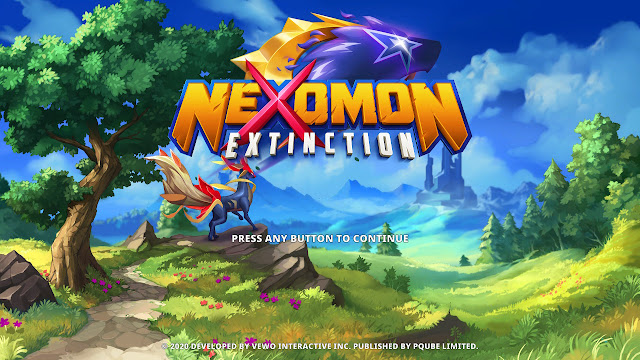
Nexomon: Extinction Offers an Interesting Story and Some Fun Twists on the Monster Collecting Genre


I’ve still been thinking about the Monster Taming genre a lot as of late. Which makes sense; as I’ve said in the past, it’s a game style that means a lot to me. I loved it growing up, and as someone who’s gotten more and more into the indie game sphere, I’m thrilled with the number of small projects tackling the style. New ideas and directions from new talent is really what helps an idea grow.

I got some of my thoughts about this out in my Pokémon 25th Anniversary piece from late last year, which makes sense. Pokémon’s dominance within the genre is undeniable; it’s far and away both the best-selling and most prolific series in the style, both of which make it most people’s introduction and formative experiences with the genre. This also means that a lot of people have opinions on what Pokémon as a series should be, though, especially compared to what it actually is.

My take on it from last year can more or less be summarized as “The mainline series is trying to be the JRPG version of something like Animal Crossing, and most of their changes have either been to enhance that side of the game, or to make the surprisingly-deep competitive side more accessible for those who want the challenge.” And I also think all of that is good, even if it is not yet perfect or to everybody’s taste. It’s a fun vision on the whole.

Of course, that’s also why the growing number of other Monster Taming games is good; no one vision of the genre can sate everyone, and it’s good to have alternatives. Which is why today I’d like to talk up VEWO Interactive’s Nexomon: Extinction, another new entry into the genre, and a very worthwhile one in my estimation.

It’s one of the more directly Pokémon-inspired games I’ve seen, and never quite escapes being “Pokémon, but…”. But I also don’t think that’s necessarily a bad thing; Pokémon at its core is a lot of fun, while also having a ton of variables and decisions that can be adjusted in a number of ways. And I enjoy seeing other people’s potential divergent evolutions of what the series could be, in tweaking these things.


And despite having a fraction of the budget or manpower* of Game Freak, Nexomon: Extinction still provides its own unique voice and polished experience. It’s not going to be for everyone, because again, I don’t know that anything can truly be that, but I do think there’s something here for both people who still enjoy Pokémon and want more new experiences like that, and people who have found the interests drift from the main series but still find themselves missing some aspects of it and wondering what could be.

*Counting the credits, I saw 1 designer/programmer, 1 producer, 6 music credits, and 19 artists and animators.

Unlike with Monster Sanctuary, there really isn’t really a big twist on the base-level Pokémon formula in Nexomon: Extinction. The gameplay still alternates between top-down overworld segments where you explore the game’s world, and turn-based RPG battles where your team of up to six elementally-themed monsters with up to four attacks each takes on either a solo wild Nexomon or opposing trainer teams.

Thursday, November 18, 2021

An Appreciation of Pokémon, for the Series' 25th Anniversary

Back in January, in my 2020 Video Game Round-Up, I made a brief, non-indie game digression to talk about Pokémon, specifically the expansion content for Sword & Shield versions. I was a pretty big fan of both the Isle of Armor and Crown Tundra DLCs, but then again, I am also a much bigger fan of Generation VIII than most people. So, with new Pokémon games on the horizon (both the Generation IV remakes Brilliant Diamond and Shining Pearl later this month, and Pokémon Legends: Arceus in early 2022), plus the added context of a few other games I’ve been playing lately, I figured I would expand a little more on what I like about Gen VIII* and the series as a whole.

*I have no idea what the breakdown of the readership of Out of Left Field looks like, so for anyone who needs a quick primer on which years and games each generation refers to, the series’ Wikipedia page breaks it down in several ways.

It’s come up a few times here (most recently in that 2020 Round-Up, and as background for my review of the wonderful Lenna’s Inception*), but I am a huge fan of Pokémon, going all the way back to the days of Red and Blue. I started right when the Gen I games came to America, and have played every generation of games since then, as well as a number of spinoffs. And as you may have picked up from my discussion of glitch-hunting and such from the Lenna’s Inception article, I was reading different fan sites and forums about the series for a lot of that time as well.

*Speaking of, some good news on that front: Bytten Studio’s follow-up, the monster taming RPG Cassette Beasts, was picked up by publisher Raw Fury (they’ve published some solid titles; I believe I’ve mentioned Dandara and Townscaper here in the past) and will be coming to consoles as well as PC. I’m still super excited for this one!

I say all of that not as any sort of brag, but 1) to emphasize that the series means a lot to me; and 2) because I know my opinion on Sword & Shield is not at all common among fans, although it is partially the result of that long relationship with the games. There are a lot of changes Gen VIII brought that elicited fan ire, but one thing that stood out to me as I read a lot of it was how familiar it all seemed, usually in stark contrast with how it was presented.

Most of the things in Generation VIII that often got cited as “franchise ruining” felt a lot like reiterations of past changes and disagreements within the fanbase. Complaints about an incomplete Pokédex? Gen III received criticism at its launch when there was no ability to transfer your Pokémon from Gen II, and Gen V received similar criticism when it tried to focus on an entirely new set of monsters. Complaints about the graphics? Possibly even more common, from long standing complaints about the games remaining in an overhead, 2D spirited style, to complaints any time the games introduced-then-removed motion in battle sprites, to complaints the moment they switched to a 3D style, with an understated resurgence in opinions that they should just return to a 2D style (although I’ve even seen disagreements there on whether such a switch should be back to pixel art or to animations).*

*My own, long-held opinion on graphics in video games (in general, not just Pokémon) is that the industry as whole is way too concerned on graphical performance and “realism”, especially at the highest level, and that we have long passed the tipping point at which the effort and money still being dumped into achieving these things are not worth the marginally better visuals that result (especially given how many other aspects of the game could use that extra focus). The Pokémon games could do better here, of course, but their greatest constraint at this point is probably more related to short turnaround times for the developers, rather than any sort of commitment to a house art style or graphical engine on Game Freak’s part.

I could go on about the variety of complaints, but my larger point is that each of these complaints has existed before, usually across multiple generations, and it hasn’t stopped people from determining different entries are their personal favorite. Any belief that Gen VIII will break from this pattern strikes me as unlikely. And as long as the series remains committed to its aggressive release schedule (of new Generations every three years, with remakes and third versions or DLC in the intervening years), each new generation is going to be more iterative, with its own new flaws, failed experiments, and successes.

As a result, in my opinion, the different entries are all fairly equal in quality, and your opinion of each entry will heavily come down on how much you liked or disliked the tweaks and fixes it brought in that specific iteration (as well as some degree of personal nostalgia). So, with that said, what personally do I look for in my own rankings? Generally, a decent number of new Pokémon, with preferably not too heavy a focus on legendaries.* A well-thought-out, engaging region to explore. Some interesting new features and quality of life improvements. An installment that mostly stands on its own, without leaning too hard on past games. A lot of these are kind of vague, but it’s really kind of a “know it when I see it” situation, rather than a hard-and-fast rubric, and I’m fine deviating from it to give extra credit for other aspects that each game does well.
 

Thursday, June 17, 2021

Halfway Through 2021, Sill No Other Game Than Ikenfell I’d Rather Be Recommending

On some level, it was probably overdetermined that I would like Ikenfell. The basic pitch, a turn-based RPG about students at a magic university solving mysteries, is extremely my jam. I dug the art style and snippets of music I got from trailers. And there were some good indications that I would vibe with the approach, seeing as the game’s creator, Chevy Ray Johnston, is close friends and ex-roommates with Greg Lobanov and Maddie Thorson, both of whom made games that I loved and already wrote about (specifically, Wandersong and Celeste).*

*In fact, I think that one of them mentioning Ikenfell somewhere might have been where I first heard about it, while researching things for one of those earlier articles? Either way, Wandersong includes small cameos of characters from both of the other games as well, and Johnston recently announced they were working with Extremely OK Games on the team’s next game, the recently-announced Earthblade (source).

But I didn’t just like it, it more than surpassed my high expectations. Happy Ray Games’ Ikenfell is probably my favorite game of the year, at the halfway point.*

*Yes, it technically came out at the end of last year, but time is fake and I can’t always play things right away.

So let’s go back and take it from the top. Ikenfell begins with a girl named Maritte, who’s lost in the woods as she searches for the titular magic school. Her older sister, Safina, is a star pupil of the institution who has totally vanished off the face of the earth while doing off-semester research there, and Maritte is determined to figure out what’s going on. Unfortunately, Maritte is not magical, and clashes with the school’s various magical defenses to keep out Ordinaries… until she suddenly shoots a fireball, ancient magic that none of the school’s guardians even recognize. With this, she is allowed to pass with the warning that something major is afoot, and Maritte is certain that her sister’s disappearance is connected.
 

Thursday, July 2, 2020

Quarantine Game Recs: Underhero


In my first Quarantine Game Rec back in May covering One Step from Eden, I discussed orphaned game mechanics and gave a whole bunch of examples, many of which were unrelated to the subject. One of those examples I namedropped was the original Paper Mario*, with Underhero being named as a successor to the mantle. As it turns out, that was what we like to call “foreshadowing”, because it’s the game that I’m covering today.

*Which, funny enough, has gotten a new sequel announced that looks much closer to the original two games in the month and a half since I wrote that.

Underhero is the debut game of studio Paper Castle Games. I played it on Switch, but it’s available for PC, Mac, and all game systems (and, in fact, if you chipped in for the recent itch.io Bundle for Racial Justice and Equality, it was included in there as well!).

And, as I alluded to, it’s a sort-of platformer-slash-RPG, with the notable twist on the formula being that the battles trade the normal turn-based system for a more free style approach, where you and your foes are limited solely by your stamina bar. You can attack or dodge only as long as you have the energy to; do too many things and you’ll be helpless until it recharges, with successful dodges speeding up the process. It means that you need to learn to properly balance the two elements while not strictly limiting you by a turn counter, which makes for an interesting dynamic.

Of course, for as interesting as the battle system was, that wasn’t my favorite element of the game. No, the single biggest draw for me was the writing, which was clever and amusing at every level, from the broad concepts to the minute-to-minute banter.


Let’s start at that broad overview: you play as a Masked Kid, a Shy Guy-like minion in the army of the evil Mr. Stitches (who has a great villain design for an evil overlord, I might add, with an iconic “burlap puppet being piloted by shadowy evil core” feel). You’re not even a particular memorable Masked Kid, just number 745.

Of course, it turns out that what actually sets your Masked Kid apart is that they dare to ask the hard questions in life, like “why fight the Hero of Legend directly when we can just drop a chandelier on him while he’s distracted?”, which leads to you successfully offing him. Of course, that just catches the attention of Mr. Stitches, who can’t stop being creepy even when he’s treating you as his newly-promoted assistant.

This leads to Stitches sending you on a mission that is ostensibly to return the magical artifacts to the Boss Monsters of his army in preparation for the inevitable next hero, but there’s clearly something deeper going on. And further complicating matters is that you have wound up in possession of Elizabeth IV, the magical talking sword of the late hero, who is adamant that you take up the late hero’s quest to overthrow the tyrannical grasp of Lord Stitches.

And, as far as short pitches go, that’s a pretty fun set up for a game. There’s a pretty clear “juggling of dual lives” conflict that Paper Castle is great at milking for comedy and drama. And really, that applies to most aspects of the game; it’s great at taking the broad tropes of other games and crafting them into something recognizable, yet also recognizing the potential for adding their own unique twists to make them into something more interesting.

One of the more common ways it does that drilling down into those common tropes even more to come up with unique ideas, either by looking at the mundane side of the fantastical, or looking for silly twists on genre conventions. For example, the main hub world is the backside of a traditional video game “Final World” level, complete with minion break room, cafeteria, and service elevators to both the boss’s lair and generic apartment complex for minor enemies. Or the main buddy duo being taken to an extreme, consisting of a jaded, sarcastic, but still all-in mentor and a cowardly, semi-reluctant protégé, who happen to also contrast in that one is an extremely talkative sword who can only instruct you, and the other is your expressive, yet still totally mute Masked Kid minion.

The other surprise Underhero uses is a gradual change in its genre. It starts out as a sort of “heroic quest buddy comedy”, and it takes the main happenings largely seriously even if the characters engaging in it are a little goofy. In that way, it also inherits a lot from Paper Mario; like, it was always still a Mario game with bright visuals and a colorful supporting cast, but in the end, they still wanted you to take the threat of Bowser (or whoever took over his role as the final villain) seriously. Same here; chatting with a lost moth minion at the local bar, or frat bro ghosts desperate to end their patrol and go party, or a nerdy shark on a Segway , or whoever else about their problems is good fun, but at the end, you still have to do something about the looming horror that is Mr. Stitches and his plan to take over the world.

And like many other things, it even plays that in an unexpected, original direction. As more and more big questions pile up, Underhero never loses its sense of humor, but does move from a “big epic adventure” tone to more of a conspiracy thriller. And you know what? They do a really good job with it! Wanting to figure out where it was going, what secrets they were hiding, Mr. Stitches’s ultimate evil plans, it all worked. And there’s enough there that it never feels like it’s being done for the sake of it; you can even pick up on a lot of the twists, or at least the general direction of where they’re going. There were several times where I said “Wait, we haven’t dealt with this dangling plot thread for a bit,” right before it was brought up and explained more. That’s a good sign that the writers did a good job of foreshadowing their ideas.

So yeah, if any of this sounds interesting, I can’t recommend picking up Underhero enough! I loved every minute of it, and I’m looking forward to whatever Paper Castle Games does next. There are a few more elements of Underhero that I want to discuss, but they’re all extremely spoiler heavy, so I want to give anyone who hasn’t played it yet a chance to duck out and try it first. If you’re ready for discussion of the end of the game, feel free to check in after the skip.